← All daily discoveries
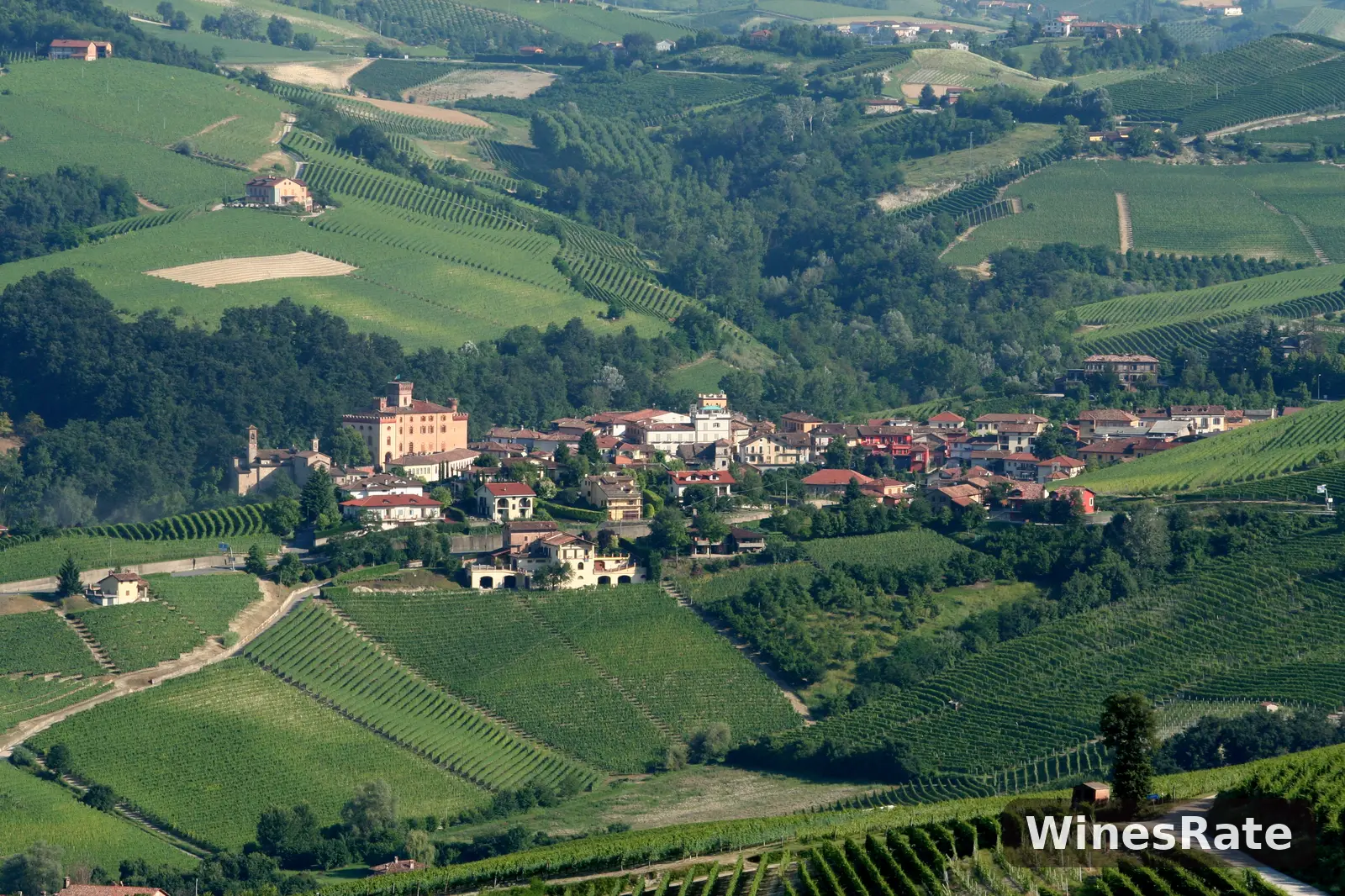
The village of Barolo among Nebbiolo vineyards in the Langhe hills, seen from La Morra, with the Falletti castle among the houses

WinesRate Guide

Barolo & the Langhe Wine Region Guide: Nebbiolo, Villages, Tastings & Truffles

Eleven villages, one grape, and a landscape so shaped by wine that UNESCO listed the whole of it. Facts checked on 28 November 2026 against the Langhe tourism board, Italia.it and UNESCO — including the honest gaps, where tasting prices and 2027 festival dates are not yet published.

11 communes · Barolo DOCGGrape: 100% NebbioloUNESCO since 2014Base: Alba
Photo: Barolo village among the vineyards, seen from La Morra, by Megan Mallen — CC BY 2.0, via Wikimedia Commons.
Alba — truffle town base →La Morra — balcony belvedere →Barolo — castle & WiMu village →Serralunga — fortress hilltop

The short answer: is Barolo a place or a wine?

Both — and that is the first thing to understand. Barolo is a village in the Langhe hills south of Alba, and Barolo is also the red wine made from 100% Nebbiolo grown in eleven communes around it: Barolo itself, Castiglione Falletto and Serralunga d'Alba in full, and parts of La Morra, Monforte d'Alba, Verduno, Novello, Grinzane Cavour, Diano d'Alba, Cherasco and Roddi. The wine takes its name from the village and its castle — and the castle is where the wine's modern story begins.

The landscape is the point. In 2014 UNESCO inscribed the Vineyard Landscape of Piedmont: Langhe-Roero and Monferrato as a World Heritage Site — five distinct winegrowing areas and a castle, listed for the living tradition of winegrowing that has shaped these hills for centuries. You visit to drive, walk and eat your way through a working wine landscape.

11
communes
in the Barolo zone
2014
UNESCO
vineyard landscape
38
months ageing
minimum, 18 in wood
1967
Enoteca Regionale
Barolo's first

Two honest limits: winery tasting prices are not published by the tourism board, and the 2027 dates for Alba's white truffle fair had not been published when we checked on 28 November 2026. This guide gives you the rules, the villages and the seasons — and tells you where to check the dates and prices before you book.

Barolo the wine, in one table

The rules are the point of Barolo: one grape, one small zone, and a long wait before the wine can be sold. These are the production rules (the disciplinare) published by the consortium that protects the denomination.

RuleWhat it saysWhy it matters to you
Grape 100% Nebbiolo — nothing else is permitted. Every Barolo is a Nebbiolo — one grape for the whole region.
Zone Eleven communes south-west of Alba: Barolo, Castiglione Falletto and Serralunga d'Alba in full; La Morra, Monforte d'Alba, Verduno, Novello, Grinzane Cavour, Diano d'Alba, Cherasco and Roddi in part. The zone is small enough to drive across in an afternoon.
Ageing At least 38 months before release, at least 18 of them in wood, counted from 1 November of the harvest year. The Barolo you taste today was harvested at least three years ago.
Riserva At least 62 months' ageing, again with at least 18 in wood. Riserva means five years of waiting. It is the bottle for a special dinner, not a Tuesday.
Status DOC since 1966, DOCG — Italy's highest classification — since 1980. Barolo was among the very first wines to reach DOCG status, alongside Barbaresco, Brunello di Montalcino and Vino Nobile di Montepulciano.
Crus Since 2010 the zone has an official cru system, the MGA (Menzioni Geografiche Aggiuntive) — around 170 named vineyards, including Cannubi, Brunate, Cerequio, Bussia and Rocche dell'Annunziata. Learn three cru names and you can read a Barolo label like a map.

🍇 The grape behind the rules: Nebbiolo takes its name from nebbia, fog — the autumn fog that settles over the Langhe as the grape ripens late in October. It is thin-skinned, pale in colour, high in tannin and acid, and it smells of rose, violet, cherry, tar and truffle. Young Barolo can be forbidding; with age it opens into one of the great wines of the world. That is why the ageing rules exist.

Why the Langhe, in four facts

The wine is the headline, but the landscape, the history and the table are what fill three days.

UNESCO — 2014

The Vineyard Landscape of Piedmont: Langhe-Roero and Monferrato was inscribed in 2014 under criteria (iii) and (v) — a living testimony to winegrowing traditions, and an outstanding example of humanity's interaction with its environment. The property is five distinct winegrowing areas plus the Castle of Grinzane Cavour: hilltop villages, castles, Romanesque churches, farmhouses and cellars, all of it still working.

History — the 19th century

Dry Barolo is a 19th-century invention. The consortium credits Camillo Benso, Count of Cavour — who planned Italian unification from his castle at Grinzane — and Giulia Colbert Falletti, last Marchioness of Barolo, with the effort that produced the wine now known as Barolo.

More than Barolo — the neighbours

The same hills make Barbaresco — also 100% Nebbiolo, from Barbaresco, Neive and Treiso north-east of Alba, aged at least two years. And the everyday wines: Dolcetto (Diano d'Alba's is a DOCG of its own), Barbera, Langhe Nebbiolo, and rare native grapes — Nas-cetta in Novello, Pelaverga in Verduno.

The table — truffles & hazelnuts

Alba is world-famous for its white truffles, hunted in the hills each autumn and celebrated at the town's international truffle fair. The Alta Langa's hills give way to hazelnut groves, and the local cooking — tajarin pasta, veal, bagna cauda — was built for Nebbiolo.

The villages, in the order the tourism board walks them

The Ente Turismo's own Langa of Barolo itinerary walks a crown of hilltop villages around the wine. These are the stops that matter most.

AlbaThe base

Start in the city of a hundred towers

Alba is the working base for the whole region — nicknamed the “city of a hundred towers” for its medieval fortifications, and world-famous for its prized white truffles. Stay here, eat here, and set out each morning into the hills. The town's medieval centre, its towers and its truffle fair are the region's front door.

Grinzane CavourThe castle

Where Cavour dreamed of a united Italy

Grinzane Cavour is the itinerary's starting point: its castle, a historical monument of national importance, is where Camillo Benso planned his reforms and dreamed of a united Italy. Alongside it, the Museo delle Langhe and the In Vigna Open Air Museum.

The village you enter on foot, through the gate

Serralunga d'Alba is the most striking village in the crown: a tall medieval fortress overlooks a hamlet clustered around its ramparts, and the village is intact — you enter on foot through the city gate. From here the landscape fully justifies the UNESCO listing.

Monforte d'AlbaThe liveliest

The old town, the auditorium, the jazz

Monforte d'Alba is one of the liveliest villages in the Langa of Barolo: its old town restored in every detail, steep alleyways leading to the top of the hill, where the former castle's bell tower stands beside a magnificent open-air auditorium, summer venue for international jazz sessions.

BaroloThe village

The castle, the museum, the Enoteca

Barolo itself is a village you walk round in an hour — and the rest of the time goes on the castle. The Castello Falletti, home of the Marquise Juliette Colbert, last heir of the Falletti dynasty, has a Juvarra-style façade with a monumental staircase. Today it holds the futuristic WiMu Museo del Vino and the Museo dei Cavatappi (Corkscrew Museum), while the Enoteca Regionale del Barolo — in the village since 1967 — is the place to taste across producers.

La MorraThe balcony

The queen of Barolo, and its best view

La Morra is called the balcony of the Langhe: from Piazza del Belvedere you look out over almost the whole Barolo zone. Its Cantina Comunale has served all the village's producers since 1973. Below, don't miss the Cappella del Barolo — the little chapel among the Brunate vineyards, painted in bright colours by Sol LeWitt and David Tremlett.

When to go: the Langhe's four seasons

The right month depends on whether you want truffles, harvest, spring light, or quiet.

Apr–JunSpring

Vines in bud, spring light

May and June bring the vines into leaf and the hills into their greenest light. The villages are quiet, the producers have time to talk, and the walking trails are at their best.

Jul–AugSummer

Festivals and long evenings

In July, Barolo hosts the Collisioni Festival, one of northern Italy's most renowned music events, and Monforte's auditorium fills with jazz. Summer weekends are crowded near the top wineries — book tastings well ahead.

Sep–DecHarvest & truffles

The season the region is famous for

Nebbiolo is picked in mid to late October, when the fog that gave the grape its name settles over the hills — and the harvest runs into Alba's International White Truffle Fair each autumn. The most atmospheric season, and the busiest: book months ahead. The 2027 fair dates had not been published when we checked on 28 November 2026.

A day in the Langhe — and a slower three days

Base in Alba. The villages are close together, but the roads wind — two tastings a day is a full day, not a half day.

Day tripFrom Turin

Alba, La Morra, Barolo

Take the train from Turin to Alba in the morning. From Alba, a car, taxi or tour takes you up to La Morra for the belvedere view, then down to Barolo village for the castle, the WiMu and a tasting at the Enoteca Regionale. Back in Alba for dinner.

Day 1Alba & Grinzane

Settle in, then the castle

Morning in Alba's old town. Afternoon at Grinzane Cavour: the castle, the Museo delle Langhe and the Enoteca Regionale. Dinner in Alba — order tajarin and a glass of Langhe Nebbiolo, the region's everyday red.

Day 2Barolo day

La Morra, Barolo, Serralunga

Morning at the La Morra belvedere and the Cappella del Barolo. Midday in Barolo village: the castle, the WiMu, the Enoteca tasting. Afternoon in Serralunga d'Alba, entering the fortress village on foot. Two producer tastings, booked in advance, is plenty for one day.

Day 3Beyond Barolo

Monforte, Verduno, Pollenzo

Morning in Monforte d'Alba and its open-air auditorium. Then Verduno for Pelaverga and Novello for Nas-cetta — the rare grapes. Finish in Pollenzo, home of the University of Gastronomic Sciences and the Banca del Vino, and in Roddi, whose castle houses a truffle centre.

Costs & getting there: practical answers

Everything below is from the official sources listed at the foot of the page — including the prices we could not verify.

🎟 Costs & entry rules

  • Tastings: tasting prices are not published by the tourism board. Expect to pay per tasting at producers and to book in advance — most Barolo and Barbaresco producers require advance booking, and weekend places sell out. The Enoteca Regionale del Barolo in Barolo village is the walk-in alternative, where you can taste across producers.
  • What to budget: plan for two producer tastings a day plus the Enoteca, the WiMu wine museum in Barolo castle, and dinners in Alba — the food is a real part of the cost, and a real part of the trip.
  • Truffle fair: Alba's International White Truffle Fair runs each autumn; 2027 dates had not been published when we checked on 28 November 2026. Check the fair's own site before booking around it.
  • Driving: Italy's drink-drive limit is 0.5 g/l, and zero for drivers under 21 or licensed less than three years. If you are tasting, hire a driver or book a tour — don't be the one counting glasses.

📍 Getting there & around

  • Base: Alba, in the province of Cuneo — the working town at the foot of the hills, with the station, the hotels and the restaurants.
  • By train: trains run from Turin to Alba. From Alba, the hilltop villages are reached by car, taxi or organised tour — there is no train between the villages, so sort out the return trip before you set out.
  • By car: the villages are close together but the roads wind and climb. A hire car gives the widest choice of wineries; a driver or a tour lets everyone taste.
  • On foot: marked trails link the villages through the vineyards — the Sentieri del Barolo around Barolo village, and the seven trails from La Morra down among the rows. Walk one way, taste, and take a taxi back.
  • While you're there: the photograph at the top of this page is Barolo village seen from La Morra — the view from the belvedere that gives La Morra its name as the balcony of the Langhe.

Keep planning with WinesRate

Before you go, browse the regions you'll be tasting: start from the WinesRate homepage, explore wine regions — 190 regions across 17 countries, see how another great French region compares in our Champagne region guide, and check what bottles cost back home in our best reds under $50 list. WinesRate doesn't sell alcohol and publishes no ratings or scores — just real prices from real stores.

Frequently asked questions

The questions readers ask about Barolo and the Langhe, answered from the verified details above.

Is Barolo a place or a wine?

Both. Barolo is a village in the Langhe hills south of Alba, and Barolo is the red wine made from 100% Nebbiolo grown in eleven communes around it. The wine takes its name from the village and its castle, the Castello Falletti — home of Giulia Colbert Falletti, last Marchioness of Barolo, who helped create the dry wine we know today.

What grape is Barolo made from, and how long must it age?

Barolo is made from 100% Nebbiolo — the production rules permit no other grape. It must age for at least 38 months before release, at least 18 of them in wood. Riserva needs at least 62 months. The wine became a DOC in 1966 and a DOCG — Italy's highest classification — in 1980, and since 2010 the zone has had an official cru system, the MGA, with around 170 named vineyards.

Which villages should I visit in the Langhe?

Start with Alba as your base, then La Morra for the belvedere view, Barolo village for the castle, the WiMu wine museum and the Enoteca Regionale, Serralunga d'Alba for its fortress village, and Monforte d'Alba for its restored old town and open-air auditorium. Add Grinzane Cavour for the castle where Cavour worked, Diano d'Alba for its Dolcetto and 500-metre viewpoint, and Verduno and Novello for the rare Pelaverga and Nas-cetta grapes.

Do I need to book winery visits in advance?

Yes, for producers. Most Barolo and Barbaresco producers take visitors by advance booking only, and weekend places sell out — book before you travel, and plan on two tastings a day at most. The walk-in alternative is the Enoteca Regionale del Barolo in Barolo village, the region's first regional wine centre, open since 1967, where you can taste across producers without a string of appointments.

When is the best time to visit — and what about the truffle fair?

The famous season is autumn: Nebbiolo is picked in mid to late October, when the fog that gave the grape its name settles over the hills, and the harvest runs into Alba's International White Truffle Fair. It is also the busiest season — book rooms and tastings months ahead. The 2027 fair dates had not been published when we checked on 28 November 2026, so check the fair's own site. Spring (May–June) is quieter and greener; summer brings the Collisioni Festival in Barolo and jazz in Monforte.

Can I visit the Langhe without a car?

Partly. Trains run from Turin to Alba, and the Sentieri del Barolo trails link the villages on foot. But there is no train between the hilltop villages, so to reach the wineries you need a car, a taxi, or an organised tour from Alba. If you are tasting, hire a driver: Italy's drink-drive limit is 0.5 g/l, and zero for new and young drivers.

Sources & how this page was made

Checked on 28 November 2026 against the official sources below:

  • Ente Turismo Langhe Monferrato Roero — “The Langa of Barolo” itinerary (visitlmr.it/en/itineraries/landscape/langa-of-wine/the-langa-of-barolo): Grinzane Cavour castle, Museo delle Langhe, first Enoteca Regionale since 1967, In Vigna Open Air Museum; Diano d'Alba at 500 metres and its DOCG Dolcetto; Sinio; Serralunga d'Alba fortress and gate; Fontanafredda; Monforte d'Alba auditorium and jazz sessions; Castiglione Falletto and the Bussia hill; Barolo castle, WiMu Museo del Vino, Museo dei Cavatappi, Enoteca Regionale del Barolo; Novello and Nas-cetta; La Morra belvedere, Cantina Comunale and Cappella del Barolo; Cherasco, Verduno and Pelaverga; Pollenzo, University of Gastronomic Sciences and Banca del Vino; Roddi castle and truffle centre.
  • Italia.it (official tourism site of Italy) — “Langhe and Roero” (italia.it/en/piedmont/langhe-e-roero): Alba, “city of a hundred towers”, and its white truffles; Castle of Serralunga d'Alba; Castello Falletti di Barolo; Enoteca Regionale del Barolo; Collisioni Festival in Barolo in July; Alta Langa hazelnut groves; Roero, Castle of Guarene, Bra, the Rocche del Roero canyons and the Great Roero Trail.
  • UNESCO World Heritage Centre — Decision 38 COM 8B.41 (whc.unesco.org): inscription in 2014 of the Vineyard Landscape of Piedmont: Langhe-Roero and Monferrato under criteria (iii) and (v); five distinct winegrowing areas and a castle; the statement of Outstanding Universal Value.
  • Consorzio di Tutela Barolo Barbaresco Alba Langhe e Dogliani — Barolo DOCG production rules (disciplinare di produzione): 100% Nebbiolo; eleven communes; minimum 38 months' ageing (18 in wood), 62 months for Riserva; DOC 1966, DOCG 1980; MGA cru system since 2010. Rulebook figures cross-checked 28 November 2026 against the published disciplinare text and the consortium's denomination summary.
  • WinesRate (winesrate.com): homepage, Regions, Champagne region page and best reds under $50 list — linked in “Keep planning” above and verified live on 26 November 2026.

The topic came from current social and trade conversation about European wine regions to visit. This page is original WinesRate content: every word was written for WinesRate, all facts were re-verified from the sources above, and no text, image or video was copied from any post or creator. The only photograph used is the CC BY 2.0 Wikimedia Commons image credited in the hero. WinesRate does not sell alcohol and publishes no ratings or scores.

This guide lives at winesrate.com/discover/barolo-langhe-wine-region/ · Prepared 28 November 2026.