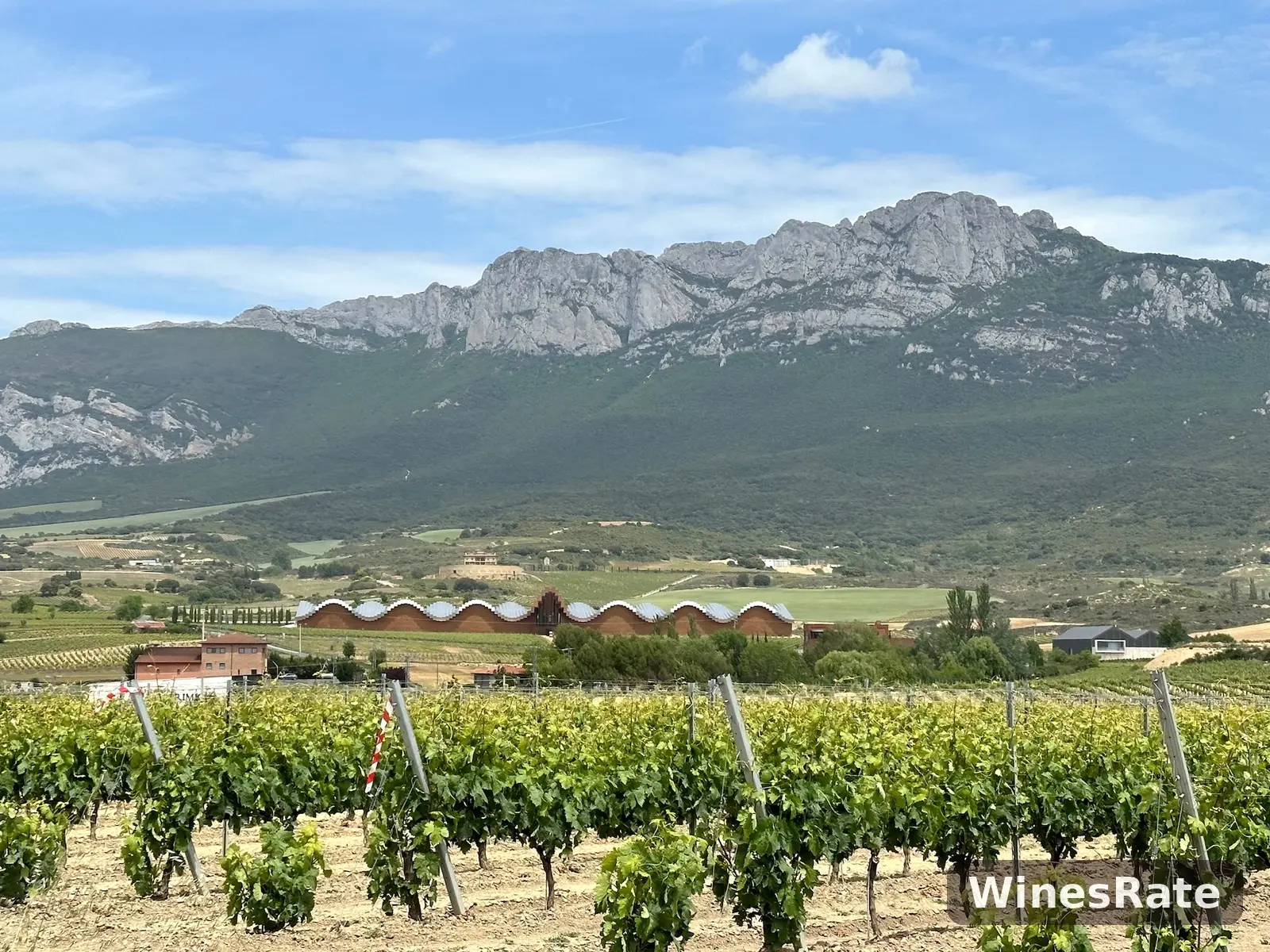
The short answer: where do I start in La Rioja?
In Haro's Barrio de la Estación — the Station District — on foot. Seven historic wineries stand within a few minutes' walk of each other beside the railway station, in the district where Rioja's modern wine trade was born in the 19th century. Two or three visits in a day, booked ahead, is the perfect introduction — and the district was important enough that the King of Spain himself toured it in the centenary year of 2025.
Then base yourself in Logroño and work outwards: the Rioja Alta villages and the Sonsierra hills to the west, and across the Ebro into Rioja Alavesa — the walled town of Laguardia and the modern winery architecture of Elciego. Three days covers it.
1925
Rioja founded
first DO in Spain
136
countries
Rioja is exported to
7
wineries
Haro's Station District
One honest limit: there is no single published price list for Rioja tastings — each winery sets its own visit and price, and weekend places sell out. This guide gives you the published prices where the tourism board lists them, the format of a typical visit, and the rule that matters most: book ahead, and never drive after tasting.
Rioja in one table: three zones, one name
Rioja is not one place but three sub-zones along the Ebro, in three autonomous communities — La Rioja, the Basque Country and Navarre. The Regulatory Council (Consejo Regulador) in Logroño governs them all under a single Qualified Designation of Origin, the DOCa.
| Sub-zone | Where | Character | Visit |
|---|
| Rioja Alta |
West, around Haro; the cooler, Atlantic-influenced end. |
Tempranillo reds with freshness and structure; the historic heart of the region. |
Haro's Station District, the Sonsierra hills, Logroño's wineries. |
| Rioja Alavesa |
North bank of the Ebro, in Álava (Basque Country), at the foot of the Sierra de Cantabria. |
Clay-limestone soils; elegant, aromatic Tempranillo; the most photographed wineries. |
Laguardia, Elciego, Samaniego — walled villages above underground cellars. |
| Rioja Oriental |
East, downstream towards Navarre; warmer and lower, Mediterranean in feel. |
Fuller, riper reds; Garnacha plays a bigger role. |
The quieter third — for a second trip. |
| In the glass | What it means | What to order |
|---|
| Tempranillo |
The backbone grape of Rioja reds, often blended with Garnacha, Graciano and Mazuelo. |
Start here — it is the taste of the region. |
| Viura |
The main white grape; white Rioja runs from crisp and fresh to deeply oxidative and aged. |
Try an aged white Rioja — it surprises everyone who expects only red. |
| Crianza |
The youngest aged tier: time in oak and bottle before release. |
The everyday Rioja — the bottle for dinner tonight. |
| Reserva |
Longer ageing in oak and bottle than Crianza. |
The bottle for a good restaurant meal. |
| Gran Reserva |
The longest ageing of all, made only in the best years. |
The bottle for a special occasion — and the one to cellar. |
🍇 The scale of it: Rioja counts more than 13,000 winegrowers and nearly 600 wineries, and its wines are sold in 136 countries, accounting for over 40% of the value of all Spanish DO wines. The region's wine business is worth some €1.5 billion a year. Those are the Regulatory Council's own figures, published for the centenary.
Frequently asked questions
The questions readers ask about La Rioja wine region, answered from the verified details above.
Where is La Rioja, and what is the DOCa?
La Rioja is Spain's most famous wine region, in the north of the country along the River Ebro, around the city of Logroño. Its wines are protected by the DOCa Rioja — Denominación de Origen Calificada — Spain's highest wine designation, first established as a Designation of Origin in 1925 and raised to DOCa status in 1991. The Regulatory Council (Consejo Regulador) in Logroño governs the whole area, which spans three autonomous communities: La Rioja, the Basque Country and Navarre.
What are Rioja Alta, Rioja Alavesa and Rioja Oriental?
They are the three sub-zones of the DOCa. Rioja Alta is the west, around Haro — the cooler, Atlantic-influenced end and the historic heart of the region. Rioja Alavesa is the north bank of the Ebro, in Álava in the Basque Country, at the foot of the Sierra de Cantabria, around Laguardia and Elciego. Rioja Oriental is the east, downstream towards Navarre — warmer, lower and more Mediterranean. The same grape, Tempranillo, tastes different in each.
What should I taste first in Haro's Barrio de la Estación?
Start with the district itself: seven historic wineries within a few minutes' walk of Haro station — López de Heredia Viña Tondonia (the first, founded 1877), CVNE, Gómez Cruzado, La Rioja Alta, Bodegas Bilbaínas, Muga and Roda. Book two or three visits in a day, always in advance, and taste the range: a young Tempranillo, a Crianza, and a Reserva or Gran Reserva from the same house, so you can taste what the oak ageing does.
What do Crianza, Reserva and Gran Reserva mean?
They are Rioja's ageing ladder, set by the DOCa rules: the longer a wine spends ageing in oak and in bottle before release, the higher the tier. Crianza is the youngest aged tier — the everyday Rioja. Reserva ages longer, and Gran Reserva longest of all, made only in the best years. The rules also set minimum alcohol levels — 11.5% for red wines.
When is the best time to visit La Rioja?
For the full experience, September and October: the grape harvest, the vineyards turning gold and red, and Logroño's San Mateo festivities. For the most joyful day of the year, late June, when Haro holds its Batalla del Vino — the Wine Battle. May and June are greener and quieter. Winter is quiet and the wineries still take visitors, but check hours first — many close on Sunday afternoons and Mondays.
Can I visit wineries in La Rioja without a car?
Partly. Haro's Barrio de la Estación is done entirely on foot, and Logroño has wineries a short walk from the centre. But to reach the villages and the Alavesa wineries you need a car, a taxi or an organised wine tour. The rule for the whole region is simple: never drive after tastings — hire a driver, book a tour, or let one person stick to spitting.