← All daily discoveries
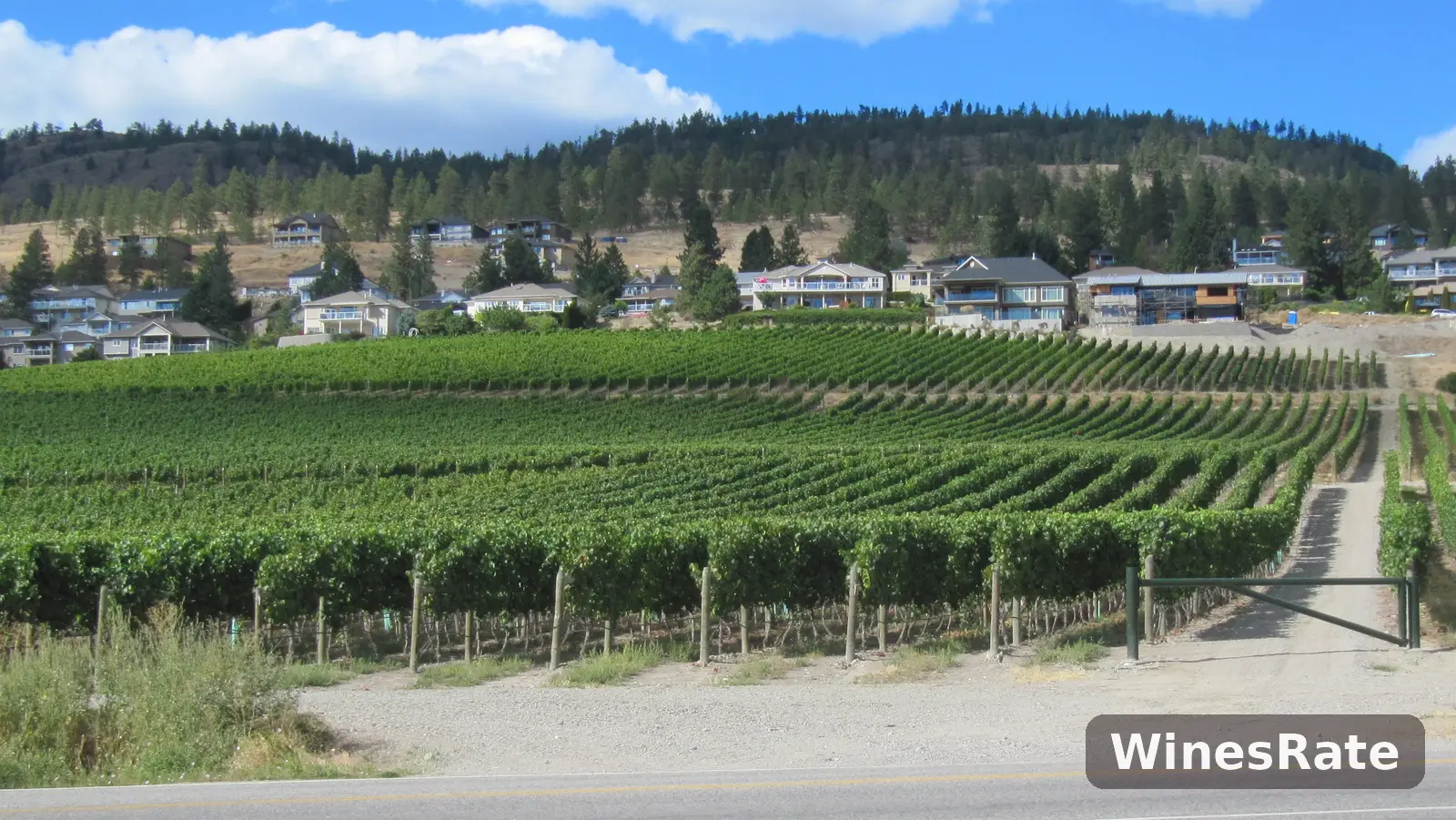
Vineyard rows sloping down to Okanagan Lake in British Columbia, with the lake and hills beyond

WinesRate Guide

Okanagan Valley Wine Region: Wineries, Tasting Fees & How to Plan a Wine Trip

More than four hundred wineries along a chain of lakes, four official sub-regions, and a valley where the tasting fee at a pioneering estate starts at twelve dollars. Every fact below was checked against Tourism Kelowna, Wine Growers BC and the wineries' own visit pages on 28 November 2026.

400+ wineries84% of BC vineyardsKelowna: ~40 wineries nearbyTastings from $12
Photo: Vineyards at Okanagan Lake, BC, Canada, by Luxil — CC BY-SA 3.0, via Wikimedia Commons.
Kelowna — largest hub ~40 wineries →Lake Country — Scenic Sip trail cool climate →Naramata Bench — famous bench east of Penticton →Oliver · Osoyoos — warm south reds & icewine

The short answer: where do you start?

Start in Kelowna. Kelowna is proud to be the birthplace of BC wine and, as the Okanagan's largest wine hub, has close to 40 wineries within a 30-minute drive — enough variety, from downtown tasting rooms to hillside estates, to fill a whole trip without ever leaving the city behind. The valley as a whole is home to over 400 wineries, and the Okanagan holds 84% of all British Columbia's vineyards, so the question is never whether there is wine to taste — it is which corner of the valley to taste it in.

Plan for three to five wineries in a day — Tourism Kelowna's own advice — and focus on one area per day, such as Lake Country, Kelowna or West Kelowna, since the wineries are clustered by region. Reservations are recommended, especially for popular wineries, guided tastings and restaurants, and a guided tour is the best way to visit several wineries safely. Tasting fees vary by winery: at Gray Monk, one of the valley's pioneering estates, a walk-in tasting of four wines costs $12 and a seated tasting of five estate wines costs $20.

400+
wineries
across the valley
4
sub-regions
official benches
3–5
wineries a day
the sensible pace
Apr
BC Wine Month
every April

One honest limit: there is no single valley-wide tasting fee — each winery sets its own prices, and many smaller producers change hours with the season. This guide gives you the published fees from the estates that print them, and tells you to check each winery's visit page before you go rather than quoting a valley average that does not exist.
The valley in numbers

Verified against Tourism Kelowna, Wine Growers BC and the Government of British Columbia on 28 November 2026. The Okanagan is one of Canada's premier wine regions — and the numbers explain why it feels so big.

FigureWhat it isWhy it matters
400+ wineries Wineries across the Okanagan Valley, according to Tourism Kelowna. More choice than any other Canadian wine region — you cannot see it all in one trip.
84% of BC vineyards The Okanagan's share of all British Columbia vineyards, per the BC Wine Institute. This is where BC wine happens — the rest of the province is a footnote by comparison.
~40 wineries Wineries within a 30-minute drive of Kelowna, the valley's largest hub. You can base in one city and taste for days without long drives.
4 sub-regions Official sub-geographical indications: Golden Mile Bench, Okanagan Falls, Naramata Bench and Skaha Bench. The labels on the bottle now tell you which bench the grapes grew on.
April BC Wine Month, every April — now in its ninth year and officially proclaimed by the BC government. Spring patios reopen, seasonal releases arrive, and crowds are still thin.
60 million years The age of the Mount Boucherie volcano, whose soils shape West Kelowna's wines. Volcanic soil is why the west side makes such full-bodied reds.
Early 1930s Calona Wines, the area's first commercial winery, founded in Kelowna — the birthplace of BC wine. The valley's wine history goes back over a century, to the first vines planted here.

⏱ The money fact: there is no valley-wide tasting fee, but the published prices are concrete. At Gray Monk Estate Winery, the walk-in Monk's Pour is $12, a seated Taste of the Estate is $20, the Odyssey tasting is $30, the Winemaker's Library experience is $40 and the 45-minute Vines & Views Tour is $25 — all checked on the winery's own visit page on 28 November 2026. Budget for a similar range elsewhere, and check each winery's page before you go.

The four sub-regions matter because the valley is not one climate. The BC government, announcing the Naramata Bench and Skaha Bench designations, described the Okanagan as a diverse region whose sub-areas have measurably different climates and terroirs — which is why the bottle now names the bench. When you plan, think in benches and trails, not in single wineries.

Why the Okanagan tastes like nowhere else

The valley's own tourism board and wine institute explain the difference in four facts: the lakes, the benches, the volcano and the icewine.

Lakes — a chain of them

The valley runs along a chain of lakes — Okanagan Lake, Kalamalka Lake, Wood Lake, Skaha Lake — and the water moderates the climate, reflecting sun onto the slopes and softening the nights. In Lake Country the wineries sit high above three lakes at once, which is why the area is known for cool-climate wines such as Riesling, Pinot Gris and sparkling.

Benches — four official sub-regions

The valley's vineyards grow on benches — raised terraces above the lakes — and four of them are now official sub-geographical indications: Golden Mile Bench, Okanagan Falls, Naramata Bench and Skaha Bench. The Naramata Bench, on the east side of Okanagan Lake, is the most famous of them: dozens of wineries along one meandering country road, with the lake below.

Volcano — 60 million years old

West Kelowna's wines are shaped by Mount Boucherie, a volcano that erupted roughly 60 million years ago, leaving volcanic soils behind. That is why West Kelowna wineries are often known for full-bodied reds such as Merlot, Cabernet Sauvignon and Syrah — the warmest, ripest corner of a cool-climate valley.

Icewine — the cold-climate signature

The Okanagan's cold winters are not a problem for winemakers — they are the point. Grapes left on the vine to freeze make icewine, the valley's signature sweet wine, and several wineries are known for it, including Grizzli in West Kelowna. If you visit in winter, ask for it: it is the wine the valley makes that almost nowhere else can.

What to taste: a grape-by-grape plan

The valley grows both cool-climate whites and warm-climate reds. Taste by area, and the grapes follow the geography.

Pinot GrisThe defining grape

Start with Pinot Gris — the grape Gray Monk built the valley on

Gray Monk Estate Winery is one of the Okanagan's pioneering wineries and helped establish Pinot Gris as a defining regional varietal. Its Pinot Gris is the valley's signature white: crisp, orchard-fruited and food-friendly. Taste it at Gray Monk itself, on the Scenic Sip trail in Lake Country, where the cool climate keeps the grape at its freshest — the walk-in Monk's Pour ($12) is the cheapest way to start.

RieslingCool climate

Riesling — the Lake Country specialist

Lake Country is especially known for cool-climate wines such as Riesling, Pinot Gris and sparkling, and several of its wineries build their reputation on Riesling alone. Tantalus Vineyards, set on one of the Okanagan's oldest continually producing vineyard sites, invites visitors to explore a range of Riesling styles — the clearest education in what the grape does in this valley. Taste Riesling here before you taste it anywhere warmer.

Pinot NoirThe elegant red

Pinot Noir — Kelowna's quiet star

Pinot Noir thrives in the valley's cooler pockets. SpearHead Winery in Kelowna has a special dedication to Pinot Noir, and Quails' Gate pairs its signature Pinot Noir with a meal at its Old Vines Restaurant. If you think of the Okanagan as a white-wine valley, a Pinot Noir tasting in Kelowna is the correction — elegant, cool-climate and distinctly Canadian.

Merlot & SyrahWarm south

Merlot, Cabernet Sauvignon and Syrah — the warm south

West Kelowna's volcanic soils favour Merlot, Cabernet Sauvignon and Syrah, and the far south — Oliver and Osoyoos — is where those grapes ripen most fully. Burrowing Owl Estate Winery in Oliver is the southern end's best-known estate, and the Golden Mile Bench near Oliver is one of the valley's four official sub-regions.

IcewineThe winter wine

Finish with icewine — and a sparkling wine

End every tasting day with the valley's two celebration wines: icewine, made from grapes frozen on the vine, and the traditional-method sparkling wines that several Kelowna estates now specialise in — Ailm Estate focuses on them entirely. Both are the valley's answer to the question of what cold winters are for.

A three-day plan, one area a day

Tourism Kelowna's own pacing: three to five wineries a day, one area at a time. Base in Kelowna — the largest hub — and let each day belong to one trail.

Day 1Kelowna & Lake Country

The Scenic Sip — cool climate and lake views

Drive north to Lake Country and the Scenic Sip Wine Trail, where the wineries sit high above Okanagan, Kalamalka and Wood Lakes. Start at Gray Monk — the pioneering estate, with the Lookout Restaurant for lunch — then Arrowleaf Cellars for a crisp Riesling or Pinot Gris at a family-run, pet-friendly picnic spot, and Ex Nihilo for bold reds and its CHAOS Bistro. Three wineries, one trail, and the best views in the valley.

Day 2West Kelowna

The Westside Wine Trail — volcano soils and big reds

Cross the lake to West Kelowna and the Westside Wine Trail. Start at Mission Hill Family Estate — book a tasting, tour or a table at the Terrace Restaurant in peak season, and look for the iconic bell tower — then Quails' Gate for Pinot Noir and Chardonnay with lunch at the Old Vines Restaurant, and Volcanic Hills. End at Grizzli for icewine and fruit wines.

Day 3Penticton & Naramata

The Naramata Bench — the valley's most famous road

Drive south to Penticton and the Naramata Bench, the bench the BC government calls the heart of the Okanagan Valley. The road meanders past dozens of wineries with the lake below: Poplar Grove, Laughing Stock, Hillside, Red Rooster and Township 7 are among the names on the bench, and most are small enough that the person pouring is often the person who made the wine. Three or four stops is a full day here — the road itself is the attraction.

No car?Tours & transit

Doing the valley without driving

Visiting multiple wineries in a day means planning transport, and Tourism Kelowna is direct about it: booking a guided tour is the best option to visit multiple wineries safely, and a designated driver is the alternative. The valley has a variety of wine-tour operators, and Sandhill Wines in downtown Kelowna — BC's original and oldest continuing winery — is walkable from the city centre for a tasting that needs no car at all.

Costs & getting there: practical answers

Everything below is from Tourism Kelowna, Wine Growers BC and Gray Monk Estate Winery, checked 28 November 2026. Prices are in Canadian dollars.

🎟 Costs & when to go

  • Tastings at Gray Monk: Monk's Pour $12 (four wines, walk-in, 15 minutes); Taste of the Estate $20 (five wines, seated); Odyssey $30 (five premium wines); Winemaker's Library $40 (four wines with cheese and charcuterie); Vines & Views Tour $25 (45 minutes).
  • Gray Monk hours: Monday to Thursday 11am–5pm, Friday to Sunday 11am–6pm; wine shop open 7 days a week, 11am–6pm.
  • Winter in Wine Country: two weekends in Oliver Osoyoos — 28–29 November and 5–6 December 2026 — with $5 tastings donated to the local Food Bank, per Wine Growers BC.
  • How many a day: three to five wineries, per Tourism Kelowna — enough time for tastings, food pairings and the scenery.
  • BC Wine Month: every April — spring patios, seasonal releases and fewer crowds than summer.
  • Reservations: recommended, especially for popular wineries, guided tastings and restaurants; some wineries take tastings by reservation only.

📍 Getting there & around

  • Base: Kelowna is the valley's largest wine hub, with close to 40 wineries within a 30-minute drive; Penticton suits the southern half.
  • Trails: the Scenic Sip (Lake Country), the Westside Wine Trail (West Kelowna) and the Naramata Bench road are the three routes to learn.
  • Transport: book a guided tour to visit several wineries safely, or use a designated driver — the valley's own advice.
  • Downtown tasting: Sandhill Wines, BC's original and oldest continuing winery, sits in the heart of downtown Kelowna.
  • Winter note: some smaller tasting rooms close or shorten hours in winter — check the winery's page before you go. Pentâge, for example, closes its tasting room for the season and reopens in May.
  • While you're there: the photograph at the top of this page is vineyards at Okanagan Lake, photographed in late summer 2011.

Keep planning with WinesRate

Before you go, browse the regions you'll be tasting: start from the WinesRate homepage, explore wine regions — 190 regions across 17 countries, learn the grapes in our wine grapes guide, and check what reds cost back home in our red wines under $50 list. WinesRate doesn't sell alcohol and publishes no ratings or scores — just real prices from real stores.

Frequently asked questions

The questions readers ask about the Okanagan Valley, answered from the verified details above.

How many wineries are in the Okanagan Valley?

More than 400, according to Tourism Kelowna — and the Okanagan holds 84% of all British Columbia's vineyards. Kelowna alone, the valley's largest wine hub, has close to 40 wineries within a 30-minute drive.

How much does wine tasting cost in the Okanagan?

Fees vary by winery, and there is no valley-wide price. At Gray Monk Estate Winery, checked on 28 November 2026: the walk-in Monk's Pour is $12, a seated Taste of the Estate is $20, the Odyssey tasting is $30, the Winemaker's Library experience is $40 and the Vines & Views Tour is $25. Check each winery's visit page before you go.

What are the Okanagan's official sub-regions?

Four sub-geographical indications: Golden Mile Bench, Okanagan Falls, Naramata Bench and Skaha Bench. They are official, protected terms under British Columbia law and may appear on the label, so the bottle tells you which bench the grapes grew on.

How many wineries can I visit in one day?

Three to five, according to Tourism Kelowna — enough time for tastings, food pairings and enjoying the scenery. Since the wineries are clustered by region, focusing on one area such as Lake Country, Kelowna or West Kelowna helps you see the most. Book a guided tour or use a designated driver.

When is the best time to visit the Okanagan wine region?

April is BC Wine Month — spring patios reopen, seasonal releases arrive and crowds are still thin. Summer is peak season, with the fullest patios and the most bookings needed. Winter in Wine Country brings $5 tastings to Oliver Osoyoos on 28–29 November and 5–6 December 2026, though some smaller tasting rooms close or shorten hours in winter — check before you go.

Do I need reservations for Okanagan wine tastings?

Not always, but they are recommended and encouraged, especially for popular wineries, guided tastings or restaurant experiences. Some wineries only offer tastings by reservation, so research or contact the winery before your visit. At Gray Monk, the Monk's Pour is walk-in only, while the seated tastings and tours are bookable.

Sources & how this page was made

Checked on 28 November 2026 against the official sources below:

  • Tourism Kelowna — “Celebrate BC Wine Month: Must-Visit Kelowna and Okanagan Wineries” (tourismkelowna.com): over 400 wineries in the Okanagan, close to 40 wineries within a 30-minute drive of Kelowna, Kelowna as birthplace of BC wine, Calona Wines founded in the early 1930s, Lake Country Scenic Sip Wine Trail and cool-climate Riesling/Pinot Gris/sparkling, Westside Wine Trail, Mount Boucherie volcano (~60 million years) and full-bodied reds, Mission Hill, Quails' Gate, Gray Monk (pioneering, Pinot Gris), Sandhill (BC's original and oldest continuing winery), Tantalus, SpearHead, BC Wine Month every April (ninth year, proclaimed by the BC government), three to five wineries a day, reservations recommended, guided tour as the safest way to visit several wineries.
  • Gray Monk Estate Winery — “Visit Us” (graymonk.com/visit/): Vines & Views Tour $25 (45 minutes), Taste of the Estate $20 (five wines), Odyssey $30 (five premium wines), Winemaker's Library $40 (four wines with cheese and charcuterie), Monk's Pour $12 (four wines, walk-in, 15 minutes, max 4 guests), hours Monday–Thursday 11am–5pm and Friday–Sunday 11am–6pm, 1055 Camp Road, Lake Country.
  • Government of British Columbia — news release on the Naramata Bench and Skaha Bench sub-geographical indications (news.gov.bc.ca, 2019AGRI0038-000945): Okanagan comprises 84% of all BC vineyards; four sub-GIs (Golden Mile Bench, Okanagan Falls, Naramata Bench, Skaha Bench); Naramata Bench described as the heart of the Okanagan Valley.
  • Wine Growers BC — events (winebc.com): Winter in Wine Country weekends in Oliver Osoyoos with $5 tastings; Pentâge Winery visit page: tasting room closed for the 2026 season, reopening 20 May 2027, tasting fee $12 with $6 waived on purchase.
  • WinesRate (winesrate.com): homepage, Regions, Grapes and Best Red Wines Under $50 pages — linked in “Keep planning” above and verified live on 26 November 2026.

The topic came from current social and trade conversation about Canadian wine regions to visit. This page is original WinesRate content: every word was written for WinesRate, all facts were re-verified from the official sources above, and no text, image or video was copied from any post or creator. The only photograph used is the CC BY-SA 3.0 Wikimedia Commons image credited in the hero. WinesRate does not sell alcohol and publishes no ratings or scores.

This guide lives at winesrate.com/discover/okanagan-valley-wine-region/ · Prepared 28 November 2026.