← All daily discoveries
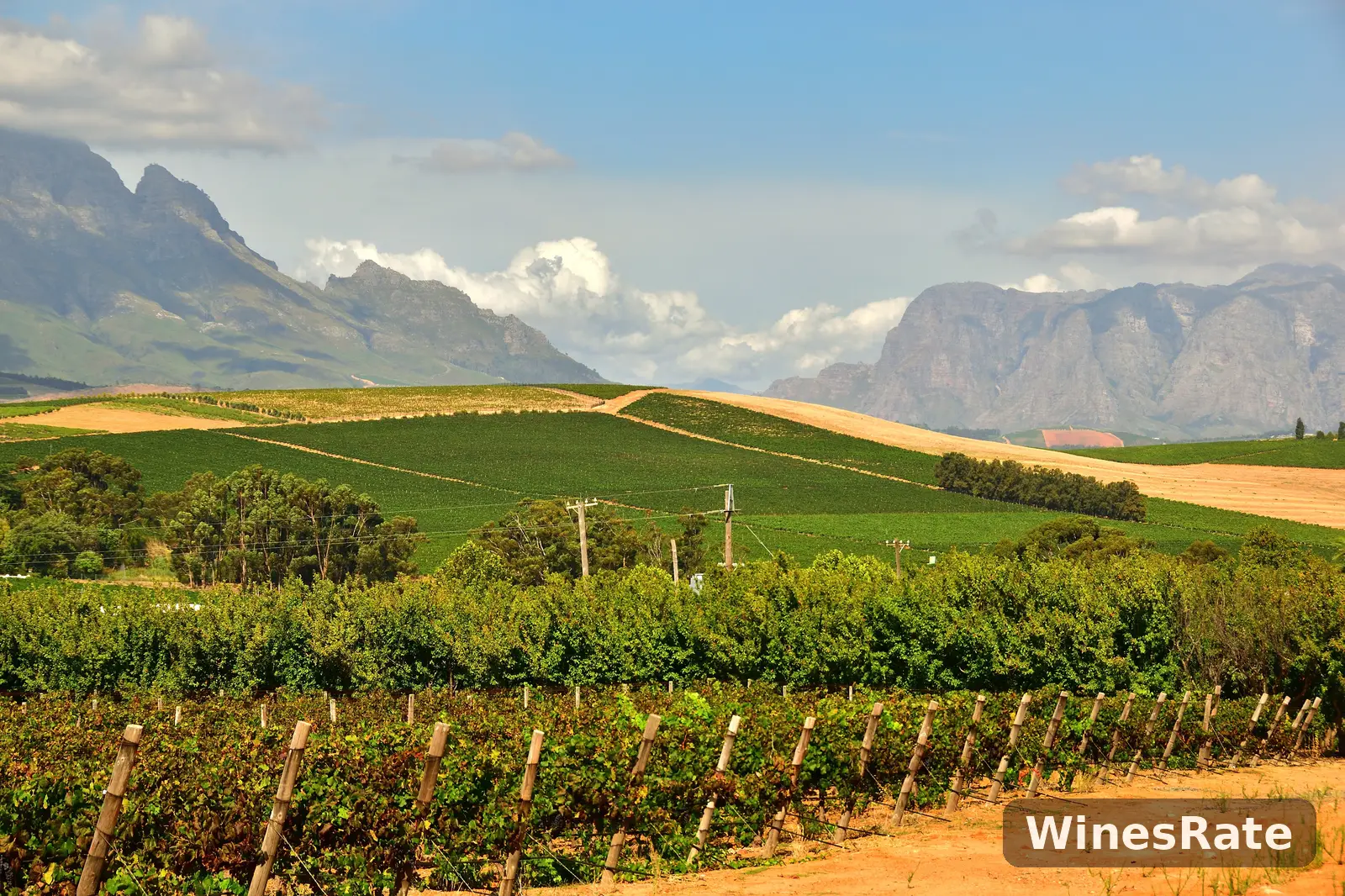
Vineyards in Stellenbosch with the mountains rising behind them under a clear blue sky

WinesRate Guide

Stellenbosch Wine Region Guide: Wine Routes, Tastings & How to Plan Your Day

South Africa's wine story starts in one oak-lined university town at the foot of three mountain ranges. Every fact below was checked against Visit Stellenbosch, the Stellenbosch Wine Routes' own history and the route's published visitor guidance on 28 November 2026.

Founded 1971 · SA's first wine routeAround 130 member farms5 sub-routesGrapes: Chenin · Cabernet · Pinotage
Photo: Vineyards in Stellenbosch, by Matthias Bethke — CC BY-SA 4.0, via Wikimedia Commons.
Stellenbosch town — hub · Eikestad →Greater Simonsberg — north-east →Helderberg — False Bay →Bottelary Hills — north-west

The short answer: can you do Stellenbosch in a day?

Yes — one sub-route in a day, done properly. The Stellenbosch Wine Routes bring together around 130 member properties, and the route's own advice is to allow at least an hour per wine farm, with three or four farms making a wonderfully full day. Trying to see everything in one day is a mistake the route itself warns against: the five sub-routes fan out from the town like wedges, so pick one, plan a sensible route through farms that sit close together, and leave yourself a reason to come back.

What makes Stellenbosch worth the planning is the combination: centuries-old estates and historic Cape Dutch homesteads alongside cutting-edge wineries, set against the Stellenbosch, Jonkershoek and Simonsberg mountains. The grapes to build the day around are Chenin Blanc, Cabernet Sauvignon and Pinotage — South Africa's own red grape, first cultivated here in 1925 — with Cap Classique sparkling wine and inventive food pairings alongside.

1971
founded
SA's first wine route
5
sub-routes
fan out from town
1679
town named
by Simon van der Stel
Jan–Mar
harvest
grapes arrive at cellars

One honest limit: tasting fees are not published centrally — most farms charge a tasting fee and many offer a choice of different tasting flights or premium experiences, so check each farm's own site before you go, particularly over weekends, public holidays and during the busy summer season.

The five sub-routes — pick one per day

The route is divided into five sub-routes, each with its own prominent wine styles, climates and location. They fan out from Stellenbosch town like wedges, so every area is a short drive from the centre.

Sub-routeWhere it runsCharacterEstates to know
Greater Simonsberg North-east of town, towards the Simonsberg mountain Mountain slopes and the Banhoek Valley; bold reds and Bordeaux blends Kanonkop, Delaire Graff, Zorgvliet
Stellenbosch Berg South of town, into the Jonkershoek Valley Historic valley estates beneath the Stellenbosch mountains Lanzerac, Ernie Els Wines
Helderberg Due south to the shore of False Bay Ocean-cooled slopes; markedly cooler than the inland valleys Vergelegen, Morgenster, Rust en Vrede
Stellenbosch Valley South-west of town Valley-floor estates and family farms, close to town Jordan Wine Estate, Spier Wine Farm
Bottelary Hills North-west of town Rolling hills; older-vine Chenin Blanc country Kaapzicht, Mooiplaas

🧭 The planning rule: choose farms that are relatively close to one another — more time tasting, less time travelling. The route's own advice is to start by exploring the wineries and experiences that interest you, then use the Stellenbosch Wine Routes map to plan a sensible route. Three or four farms make a full day; a fifth is for the keen.

The sub-routes come from physical location only — they have no relation to the Wine of Origin system or any wards within the Stellenbosch region. As part of the Cape Winelands, the Stellenbosch Wine Routes are also a member of the global Great Wine Capitals Network, and the routes are counted among the six most popular tourist attractions in South Africa.

Why Stellenbosch matters

The town is older than the route by nearly three centuries — and the route itself is older than almost every organised wine trail in the New World.

1679 — the town is named

The recorded history of Stellenbosch dates to 1679, when the name was given to a small island on the Eerste River by Simon van der Stel, then governor of the Cape. The Eerste — “First” — River was the first river Dutch settlers came upon after leaving their Cape Town base, and the surrounding hills were soon planted to vines.

1971 — the first wine route

In 1971 Stellenbosch became the first wine region in South Africa to establish a wine route as an organised network of wineries for visitors. It was founded by Frans Malan of Simonsig, Niel Joubert of Spier and Spatz Sperling of Delheim, who wanted vineyard owners to sell wine under their own labels instead of sending all their grapes to co-operatives.

Pinotage — South Africa's own grape

Pinotage was first cultivated in 1925, a cross of Pinot Noir and Cinsault bred in Stellenbosch, and the first commercially released Pinotage, in 1961, carried the Lanzerac name. Lanzerac, in the Jonkershoek Valley, dates back to 1692 and is one of the oldest heritage farms in the Western Cape — and the home of the world's first bottled Pinotage.

Heritage — the Eikestad

The town's streets were planted with oak trees, giving it the name Eikestad — Town of Oaks — still used today. The earliest building in the Stellenbosch area dates to 1689 and can still be seen on the historic wine farm of Muratie, while the town centre keeps three centuries of Dutch, Georgian and Victorian architecture along its oak-lined streets.

What to taste: a glass-by-glass plan

A traditional tasting runs from lighter and drier wines to fuller-bodied reds and sweeter wines. Cap Classique sparkling wines can provide a refreshing change along the way — and there is no need to finish every glass; spittoons are provided.

Chenin BlancThe white to learn

Start with Chenin — especially the old vines

Chenin Blanc is South Africa's most-planted white variety and Stellenbosch's signature white: dry, textured, and at its best from older vines. The Bottelary Hills sub-route is the place to look for older-vine Chenin, and several farms pour it alongside food pairings — chocolate and cheese tastings paired with wine are a Stellenbosch speciality. Taste a young Chenin and an older-vine one back to back and the difference is the lesson.

CabernetThe red backbone

Cabernet Sauvignon and the Bordeaux blends

Stellenbosch's red reputation rests on Cabernet Sauvignon and Bordeaux-style blends, grown on the warmer slopes of the Helderberg and the Simonsberg foothills. Estates such as Kanonkop, Rust en Vrede and Ernie Els Wines are the names to look for: structured, age-worthy reds that show why the region dominates the South African wine scene in terms of quality. Taste these after the whites, not before.

PinotageOnly here

Pinotage — the grape Stellenbosch invented

No Stellenbosch trip is complete without Pinotage, the cross of Pinot Noir and Cinsault first cultivated here in 1925. Lanzerac is the historic home — the first commercially released Pinotage carried its name — and Beyerskloof, founded by Pinotage champion Beyers Truter, is its modern stronghold, with a wine bar in the heart of Stellenbosch town for a second taste after dinner. Expect dark fruit, spice and a smoky edge, and ask the tasting-room staff how the grape has changed: modern Pinotage is a different wine from the rustic versions of decades past.

Beyond the glassPairings & picnics

Pairings, picnics and the rest of the farm

There is much more to a day on the routes than a traditional tasting. Look out for wine and food pairings, chocolate and cheese tastings, vineyard walks, cellar tours, art, gardens and picnics. If you can, include a cellar tour: harvest, generally from January to March, is an especially exciting time to visit, when you may see grapes arriving from the vineyards and feel the energy of winemaking first-hand. And most wineries sell directly from the cellar door, many allowing mixed cases, with local and international delivery available.

A day on the routes — and a slower three days

Visit Stellenbosch's own advice, applied: one sub-route per day, lunch booked in advance, and the last farm reached at least an hour before it closes.

Day 1Stellenbosch Valley

The gentle introduction

Stay close to town: Spier Wine Farm in the morning — one of the Cape's oldest farms, family-friendly, with open lawns and an eco-conscious outlook — then Jordan Wine Estate in the Stellenbosch Kloof for a tasting with mountain views. Book lunch at a farm restaurant in advance and build the rest of the route around the reservation; many kitchens close after lunch service, so do not leave the decision until late afternoon.

Day 2Helderberg

The red-wine day

Head south to the ocean-cooled Helderberg: Vergelegen for its gardens and historic estate, Rust en Vrede for its restaurant in the original winery, and Morgenster near Somerset West. This is the Cabernet day — taste the reds slowly, ask for a cellar tour, and finish with a picnic or a late lunch rather than a fifth tasting.

Day 3Greater Simonsberg

The mountain day

Drive north-east into the Banhoek Valley and the Simonsberg foothills: Kanonkop for Pinotage and Cabernet, Delaire Graff for art and views across the valley, and a stop at Lanzerac in the Jonkershoek Valley to stand where the first bottled Pinotage came from. End the day in town, on foot: the wine bars of Church, Bird and Ryneveld Streets pour the region's wines by the glass, and most are within easy walking distance of each other.

Costs & getting there: practical answers

Everything below is from Visit Stellenbosch and the Stellenbosch Wine Routes' own visitor guidance.

🎟 Costs & tasting rules

  • Tastings: most farms charge a tasting fee, and many offer a choice of different tasting flights or premium experiences. Fees are not published centrally — check each farm's site.
  • How long: allow at least an hour per wine farm, and longer if you are booking a pairing, cellar tour, lunch or another experience. Three or four wineries make a wonderfully full day.
  • Lunch: book lunch in advance and build the route around it. Many farm kitchens close after lunch service.
  • Last tastings: don't arrive at a winery just before closing and expect a full tasting. Aim to reach your final farm at least an hour before its tasting room closes, and check when last tastings are offered.
  • Buying wine: most wineries sell directly from the cellar door, and many allow mixed cases. Local and international delivery may be available — ask the tasting-room team about shipping.

📍 Getting there & around

  • Where: Stellenbosch is a historic university town in the Cape Winelands, east of Cape Town, ringed by the Stellenbosch, Jonkershoek and Simonsberg mountains.
  • From Cape Town: an easy drive east from the city and its international airport; the town itself is the hub, and the five sub-routes fan out from it.
  • Around the routes: the region is large, so choose farms close together. If you would rather not plan the route yourself, book a guided wine tour — local guides know the region intimately and can tailor a day around your interests.
  • Don't drive after tasting: if you are exploring independently, always appoint a designated driver or arrange transport, so everyone can relax and enjoy the experience.
  • Visitor information: Visit Stellenbosch, 141 Dorp Street, Stellenbosch — open daily 09:00–17:00 — is the place to start for maps, routes and same-day advice.

Keep planning with WinesRate

Before you go, browse the regions you'll be tasting: start from the WinesRate homepage, explore wine regions — 190 regions across 17 countries, catch up in the WinesRate Journal, and check what bottles cost back home in our wine retail price reports. WinesRate doesn't sell alcohol and publishes no ratings or scores — just real prices from real stores.

Frequently asked questions

The questions readers ask about the Stellenbosch wine region, answered from the verified details above.

How many wineries are on the Stellenbosch Wine Routes?

The routes bring together around 130 member properties, according to Visit Stellenbosch, and the Stellenbosch Wine Routes themselves describe a co-ordinated network of more than 150 wineries. Either way, it is South Africa's largest wine route — far too many farms for one trip, which is why the route is divided into five sub-routes.

What are the five sub-routes of Stellenbosch?

The five sub-routes are Bottelary Hills, Greater Simonsberg, Helderberg, Stellenbosch Valley and Stellenbosch Berg. Each has its own prominent wine styles, climates and location, and they fan out from Stellenbosch town like wedges. The sub-routes come from physical location only — they have no relation to the Wine of Origin system or any wards within the region.

What is Pinotage, and why is Stellenbosch its home?

Pinotage is South Africa's own grape, a cross of Pinot Noir and Cinsault first cultivated in Stellenbosch in 1925. The first commercially released Pinotage, in 1961, carried the Lanzerac name, and Lanzerac — dating to 1692 in the Jonkershoek Valley — is home to the world's first bottled Pinotage. Taste it at Lanzerac, or at Beyerskloof, founded by Pinotage champion Beyers Truter.

How much does a wine tasting cost in Stellenbosch?

Tasting fees are not published centrally and vary from farm to farm. Visit Stellenbosch notes that most farms charge a tasting fee and many offer a choice of different tasting flights or premium experiences. Check each farm's own site before you go, and budget for pairings and cellar tours, which cost more than a standard flight.

When is the best time to visit Stellenbosch?

Harvest, generally from January to March, is an especially exciting time to visit, when you may see grapes arriving from the vineyards and experience the energy of winemaking first-hand. Summer is the busy season, so check ahead over weekends, public holidays and the summer months. Winter is quieter, with fewer crowds and the same mountain views.

Do I need a car to visit the Stellenbosch wine farms?

You need transport between farms, but not necessarily your own car. The route's own advice is to appoint a designated driver or arrange transport if you are exploring independently. Guided wine tours are the easy alternative — local guides know the region intimately and can tailor a day around your interests — and the town's wine bars are walkable in the evening.

Sources & how this page was made

Checked on 28 November 2026 against the official sources below:

  • Visit Stellenbosch — “Wine” (visitstellenbosch.org/wine): the Stellenbosch Wine Routes established 1971, the country's oldest and largest wine route, around 130 member properties, the five sub-routes, planning advice (an hour per farm, three or four farms a full day, book lunch, check ahead, designated driver), harvest January to March, pairings and cellar tours, visitor centre at 141 Dorp Street, open daily 09:00–17:00.
  • Stellenbosch Wine Routes — “Our Story” (wineroute.co.za/about-us/our-story): town named 1679 by Simon van der Stel, the Eerste River, earliest building 1689 at Muratie, Eikestad (Town of Oaks), university founded 1918, the route founded 1971 as South Africa's first organised wine route, more than 150 wineries, five sub-routes, Great Wine Capitals Network membership.
  • WineMag — “Stellenbosch Wine Routes celebrates 50th anniversary” (winemag.co.za): the route officially launched in 1971, over 120 wine producer members, the five sub-routes — Bottelary Hills, Greater Simonsberg, Helderberg, Stellenbosch Valley and Stellenbosch Berg — with no relation to the Wine of Origin system.
  • JoziGist — “The Stellenbosch Wine Routes celebrate 50 years of historic winemaking”: founded by Frans Malan (Simonsig), Niel Joubert (Spier) and Spatz Sperling (Delheim), officially launched 1971; Lanzerac dating to 1692, one of the oldest heritage farms in the Western Cape and home to the world's first bottled Pinotage.
  • Wine Traveler — “Plan a Stellenbosch Wine Trip” (winetraveler.com): Pinotage first cultivated in 1925, first commercially released Pinotage in 1961 carrying the Lanzerac name; the Vine Hopper routes; the five sub-routes fanning out from town.
  • WinesRate (winesrate.com): homepage, Journal, Regions and Market Reports pages — linked in “Keep planning” above and verified live on 26 November 2026.

The topic came from current social and trade conversation about the world's great wine regions to visit. This page is original WinesRate content: every word was written for WinesRate, all facts were re-verified from the sources above, and no text, image or video was copied from any post or creator. The only photograph used is the CC BY-SA 4.0 Wikimedia Commons image credited in the hero. WinesRate does not sell alcohol and publishes no ratings or scores.

This guide lives at winesrate.com/discover/stellenbosch-wine-region/ · Prepared 28 November 2026.