← All daily discoveries
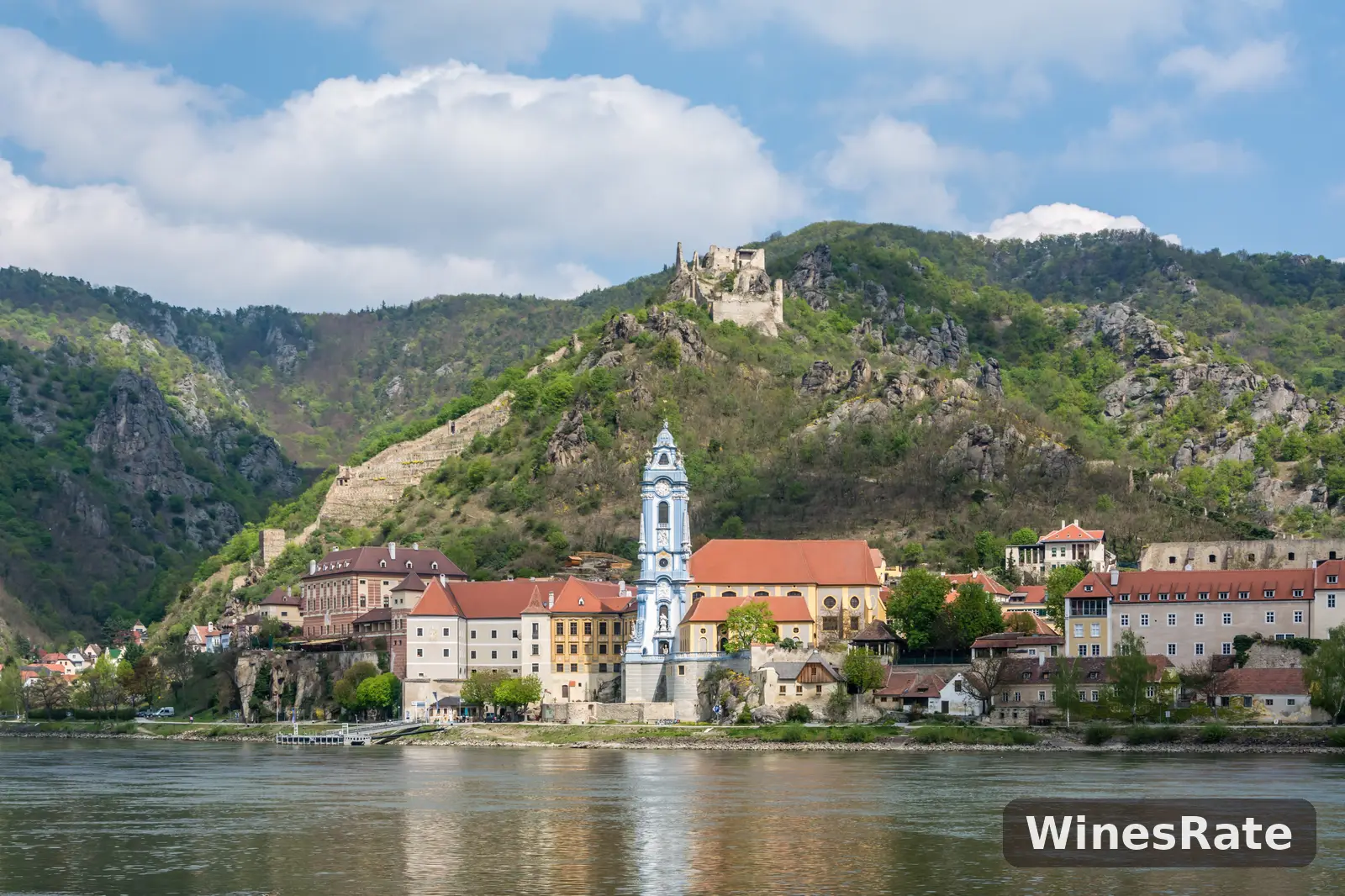
Dürnstein in the Wachau valley, with its blue-and-white abbey tower above the Danube and terraced vineyards climbing the hillside behind the village

WinesRate Guide

Wachau Valley Wine Guide: Villages, Vineyards, Tastings & How to Get There

Thirty-six kilometres of Danube, five wine villages, two grapes done to perfection, and a valley you can travel end to end without touching a steering wheel. Every fact below was checked against the region's own tourism board, Austria's national tourist office, UNESCO and the valley's leading estate on 27 November 2026.

Melk–Krems · 36 kmUNESCO since 2000Grapes: Grüner Veltliner & RieslingTravel: train, boat, bike
Photo: Dürnstein in the Wachau, by Uoaei1 — CC BY-SA 3.0, via Wikimedia Commons.
Melk — western gateway abbey →Dürnstein — blue tower wine heart →Spitz — quiet vines Tausendeimerberg →Krems — eastern gateway old town

The short answer: can you do the Wachau without a car?

Yes — and it is better without one. The Wachau is only about 36 kilometres from Melk in the west to Krems in the east, and its villages are strung along one river road and one railway. Trains run from Vienna to both gateways, scheduled boats sail between them in the warmer months, and the Danube cycle path runs the whole length almost flat. If you are tasting wine, that matters: nobody in your group needs to be the designated driver.

Two grapes dominate — Grüner Veltliner and Riesling — grown on steep, hand-worked terraces above the Danube and sorted into three styles found nowhere else: Steinfeder, Federspiel and Smaragd. Learn those three words and you can order with confidence anywhere in the valley. The valley has been a UNESCO World Heritage Site since 2000, listed as the Wachau Cultural Landscape — for the whole worked landscape of terraces, monasteries, castles and villages, not one building.

36
kilometres
Melk to Krems
200+
estates
in Vinea Wachau
3
wine styles
Steinfeder · Federspiel · Smaragd
Apr–Oct
main season
boats & tastings

One honest limit: tasting prices are not published on the leading estate's own website, and small family producers often have no fixed hours at all. This guide gives you the format, the published hours, and the price range visitor guides report — and flags the gaps, so you check before you travel.

The three wines to learn first

The Wachau's classification is its own invention, and the most useful thing a visitor can learn. It sorts the valley's dry wines by ripeness and weight — not by vineyard rank — and the names come from the valley itself.

StyleNamed afterWhat it isDrink it when
Steinfeder A local feather grass The lightest: fresh and lightly fruity. The valley's everyday glass. Midday, outdoors, with a cold plate at a Heuriger.
Federspiel The decoys used in falconry The classic dry middle style: an ideal food wine. With dinner — the best introduction to Grüner Veltliner.
Smaragd The emerald lizard of the dry stone walls The highest level: late-harvested grapes, finest sites. When you want the valley's best — a single-vineyard wine, tasted slowly.

🍇 The grapes behind the styles: Grüner Veltliner is the valley's signature grape — peppery, mineral and precise — and Riesling is its great partner, grown on the steep primary-rock slopes around Spitz and Weißenkirchen. Both come in all three styles, so a tasting running all three side by side is the fastest education in the valley.

The terraces are part of the story. The vineyards climb the valley sides in narrow terraces held up by dry stone walls, worked largely by hand. The walls and the vines are the landscape UNESCO listed in 2000 — 18,462 hectares of cultural landscape.

The villages, west to east

Five places do most of the work in a Wachau trip. Start at one end and work along it.

MelkWestern gateway

Start at the abbey above the river

Melk is the western gateway, and its abbey — the great Baroque monastery above the Danube — is the valley's grandest sight. Trains from Vienna arrive here, boats leave from below the town, and the cycle path starts here. Give the abbey a morning, then travel down the valley by boat or bike.

SpitzQuiet vines

The working wine village

Spitz is quieter than Dürnstein, a working wine town at the foot of the Tausendeimerberg — the “thousand-bucket mountain”. This is Riesling country on primary rock: eat in a family-run Heuriger after a walk among the terraces.

WeißenkirchenProducer heartland

The village the producers call home

Weißenkirchen, surrounded by vineyards, is where many of the region's top producers are concentrated — the heartland for serious tasting, and home to the single vineyard Achleiten.

DürnsteinBlue tower

The village everyone photographs

Dürnstein is the valley's most photographed spot: the blue-and-white tower of its abbey church above stone houses on a bend in the Danube, with the castle ruins — where Richard the Lionheart was held prisoner — behind. It fills with day visitors in summer and belongs to overnight guests in the evening. It is also home to Domäne Wachau.

KremsEastern gateway

End in the valley's town

Krems an der Donau is the eastern gateway and the valley's largest town — the practical end of the trip. Its old town, with the connected quarter of Stein, is worth an unhurried hour: medieval streets, Baroque facades and the Steiner Tor, the fifteenth-century city gate.

South bankRossatz · Mautern

Don't miss the quieter bank

The southern side of the Danube has long been the quieter half, with its own taverns, wineries and Heurigen — in villages such as Rossatz, Mautern, Wösendorf and Aggsbach — and it is the home of the region's typical Neuburger grape. Cross by ferry: the same valley, at half the pace.

Where to taste: taverns, cellars & the big estate

Tasting happens in three kinds of place: the estate tasting room, the wine tavern, and the village wine shop.

Domäne Wachau — Dürnstein 107

The valley's leading estate and a good first stop: a growers' cooperative with organically farmed vineyards, working small parcels of steep terraces largely by hand. Its single-vineyard wines — Achleiten, Brandstatt, Kellerberg — show what the finest sites taste like. The tasting room at Dürnstein 107 is open April to October, Monday to Friday 10am–5pm and Saturday 10am–2pm; November, December and March, Monday to Friday 10am–5pm; January and February are the winter break. Tasting prices are not published — ask on arrival.

Heuriger & Buschenschank — the tavern culture

The wine tavern is the Wachau's own institution. A Buschenschank serves only its own wines, with cold dishes and drinks made from its own produce. A Heuriger is a wine bar open all year round that may also serve hot dishes — but the current year's young wine must always be on the menu. Both serve local wines with homemade food and a view of the Danube.

Vinea Wachau — 200+ estates

Behind the three styles stands Vinea Wachau Nobilis Districtus: over 200 estates committed to quality, authenticity and hand-crafting, and the body that names the valley's single vineyards — the Rieden — such as Achleiten, Kellerberg, Singerriedel and Setzberg.

What a tasting costs — the honest answer

Vienna visitor guides put a typical Wachau tasting at €10–€25 per person — but prices vary by estate and season, and many small producers have no fixed hours or published prices. Check the estate's site or call ahead, especially for famous small producers, some of whom take visitors by appointment only.

When to go: the valley's four seasons

The right month depends on what you want: blossom, boats, harvest, or quiet.

Apr–MayBlossom

Apricot blossom, then green vines

Late April to mid-May is the famous apricot blossom season, when the valley's orchards bloom pink-white — the Marillen are a regional speciality, sold as jam, schnapps and dumplings. Wineries reopen and the boats are back from May.

Jun–AugHigh summer

Boats, bikes and long evenings

Peak season: boats running, vineyards green, every tavern open. It is the most crowded time in Dürnstein, so base yourself in Spitz or Weißenkirchen and visit Dürnstein early or late.

Sep–OctHarvest

The harvest, and the young wine

September to mid-October is the wine harvest, when the valley works hardest and the taverns pour Sturm — the partly fermented young wine. The terraces turn gold in mid to late October, crowds thin, and the boats still sail.

Nov–MarQuiet season

Beautiful, quiet — and boat-free

From November to March the boats do not sail, smaller villages have limited openings, and Domäne Wachau takes its winter break in January and February. The valley is quiet and beautiful in winter sun — but check openings before you go.

A day in the valley — and a slower three days

The classic day is a loop: train one way, boat the other. With three days, slow down.

Day tripTrain + boat

Melk, boat, Dürnstein, Krems

Take the morning train from Vienna to Melk — about an hour — and give the abbey two hours. Then board the DDSG boat downstream: the full Melk-to-Krems cruise takes about an hour and three-quarters, with stops at Spitz and Dürnstein, so step off at Dürnstein for the blue tower, the castle ruins and a tasting at Domäne Wachau. Then take the train to Krems and back to Vienna — eight to ten hours door to door.

Day 1Melk & Spitz

Arrive west, settle in Spitz

Train to Melk, morning at the abbey, lunch in the old town, then the boat east to Spitz. Walk the Tausendeimerberg in the late light, and eat at a Heuriger as the valley goes quiet.

Day 2Weißenkirchen & Dürnstein

The tasting day

Morning in Weißenkirchen — tastings around Achleiten and the other named single vineyards. Afternoon in Dürnstein: Domäne Wachau's tasting room, the blue tower, and the climb to the castle ruins. Dinner in Dürnstein after the day-trippers have left.

Day 3Krems & the south bank

Cross the river, end in Krems

Ferry to the south bank — Rossatz or Mautern — for a slower morning among the Neuburger vineyards and a tavern lunch. Then cross back and finish in Krems: the old town, the Steiner Tor, one last tasting.

Costs & getting there: practical answers

Transport figures below come from Vienna visitor guides — check ÖBB and DDSG for live fares before you book.

🎟 Costs

  • Trains: ÖBB trains run hourly from Vienna to Melk and Krems; about an hour to Melk, a little longer to Krems. Visitor guides put a round trip at roughly €40–€50 — check the ÖBB app for the live fare.
  • Boat: DDSG Blue Danube sails between Krems and Melk in the warmer months; tickets from around €25, and the full cruise takes about 1 hour 40 minutes downstream. Low water can change the timetable — check the DDSG site.
  • ÖBB Wachau-Ticket: bundles the return train from Vienna, a DDSG cruise and a visit to Melk Abbey. Worth pricing against the separate legs.
  • Melk Abbey: visitor guides list entry at €16 self-guided or €20 guided.
  • Tastings: typically €10–€25 per person, according to visitor guides; Domäne Wachau does not publish prices. Many small producers take visitors by appointment only.
  • A full day: visitor guides put a complete day trip from Vienna at roughly €40–€90 per person, before tastings and food.

📍 Getting there & around

  • Gateways: Melk in the west and Krems an der Donau in the east. Both are on the rail network from Vienna; there is no scheduled boat from Vienna itself.
  • By boat: DDSG Blue Danube sails the Krems–Melk stretch in the warmer months, roughly April to October, stopping at Dürnstein, Weißenkirchen and Spitz.
  • By bike: the Danube cycle path runs the whole valley — about 36 km from Melk to Krems, almost flat. Bikes can go on the boats.
  • On foot: the Wachau World Heritage Trail links the villages through the vineyards and forest ridges.
  • By car: the A1 reaches Melk from Vienna in about an hour — but if you are tasting, take the train.

Keep planning with WinesRate

Before you go, browse the regions you'll be tasting: start from the WinesRate homepage, explore wine regions — 190 regions across 17 countries, catch up in the WinesRate Journal, and check what bottles cost back home in our wine retail price reports. WinesRate doesn't sell alcohol and publishes no ratings or scores — just real prices from real stores.

Frequently asked questions

The questions readers ask about the Wachau Valley, answered from the verified details above.

Where is the Wachau, and how big is it?

The Wachau is a stretch of the Danube valley in Lower Austria, running about 36 kilometres from Melk in the west to Krems an der Donau in the east, roughly 70–85 kilometres west of Vienna. UNESCO inscribed it as the Wachau Cultural Landscape in 2000, a listed area of 18,462 hectares.

What is the difference between Steinfeder, Federspiel and Smaragd?

They are the Wachau's three dry-wine styles, sorted by ripeness and weight. Steinfeder, named after a local feather grass, is the lightest — fresh and lightly fruity. Federspiel, named after falconry decoys, is the classic dry middle style and an ideal food wine. Smaragd, named after the emerald lizard of the dry stone walls, is made from late-harvested grapes from the finest sites and is the highest level. Both Grüner Veltliner and Riesling come in all three styles.

What is a Heuriger, and how is it different from a Buschenschank?

Both are the Wachau's traditional wine taverns, serving local wine with homemade food. A Buschenschank serves only its own wines, with cold dishes and drinks made from its own produce. A Heuriger is a wine bar open all year round that may also serve hot dishes — but the current year's young wine must always be on the menu.

Do I need a car in the Wachau?

No. Trains run from Vienna to Melk and Krems, scheduled DDSG boats sail between the two gateways in the warmer months, and the Danube cycle path runs the whole valley almost flat. The classic trip is train one way and boat the other. A car is only essential in the quiet winter months, when the boats do not sail.

When is the best time to visit the Wachau?

It depends on what you want. Late April to mid-May brings the apricot blossom; late May to September is peak season; September to mid-October is the grape harvest, with Sturm — the partly fermented young wine — in the taverns; mid to late October brings autumn colour. From November to March the boats stop and the valley is quiet.

Can I just walk into Domäne Wachau for a tasting?

Yes, during opening hours. The tasting room at Dürnstein 107 is open April to October, Monday to Friday 10am–5pm and Saturday 10am–2pm, and November, December and March, Monday to Friday 10am–5pm. January and February are the winter break. Tasting prices are not published — ask on arrival. Some small producers take visitors by appointment only.

Sources & how this page was made

Checked on 27 November 2026 against the official sources below:

  • Wachau-Nibelungengau-Kremstal, the regional tourism board (wachau.at/en/): the Wachau as a UNESCO World Heritage Site, the Danube Cycle Path, the Wachau World Heritage Trail and the region's hiking trails.
  • Austria's national tourist office (austria.info/en-us/highlights/wine-taverns-wachau/): Steinfeder, Federspiel and Smaragd; the villages Dürnstein, Weißenkirchen, Spitz, Rossatz, Mautern, Wösendorf and Aggsbach; Melk as the gateway; Heuriger and Buschenschank explained; Neuburger as the south bank's typical grape.
  • UNESCO World Heritage Centre, World Heritage List (whc.unesco.org): Wachau Cultural Landscape, inscribed 2000, 18,462 hectares, ID 970.
  • Domäne Wachau, the estate's own site (domaene-wachau.at/en/): Austria's leading estate with organically farmed vineyards; single vineyards Achleiten, Brandstatt and Kellerberg; tasting room at A-3601 Dürnstein 107; hours April–October Mon–Fri 10am–5pm, Sat 10am–2pm; November/December/March Mon–Fri 10am–5pm; January–February winter break.
  • Vinea Wachau Nobilis Districtus (vinea-wachau.at/en/): over 200 estates, and the named single vineyards (Rieden) including Achleiten, Kellerberg, Singerriedel and Setzberg.
  • Vienna visitor guide, Wachau Valley day trip (viennatourism.org/wachau-valley-day-trip-vienna/): ÖBB trains from Vienna to Melk and Krems, round-trip fares, the ÖBB Wachau-Ticket bundle, DDSG boat times and fares, the 36 km cycle path, tasting prices typically €10–€25, Melk Abbey entry, and the seasonal calendar. Used for transport and price ranges only — check ÖBB and DDSG for live fares.
  • WinesRate (winesrate.com): homepage, Journal, Regions and Market Reports pages — linked in “Keep planning” above and verified live on 26 November 2026.

The topic came from current social and trade conversation about European wine regions to visit. This page is original WinesRate content: every word was written for WinesRate, all facts were re-verified from the sources above, and no text, image or video was copied from any post or creator. The only photograph used is the CC BY-SA 3.0 Wikimedia Commons image credited in the hero. WinesRate does not sell alcohol and publishes no ratings or scores.

This guide lives at winesrate.com/discover/wachau-wine-region/ · Prepared 27 November 2026.